

Stay on Documentum or leave it. Two good answers, and everyone quoting you only sells one.
The vendor sells staying. Migration-tool vendors sell leaving. We run OpenText/Documentum, Alfresco, and Microsoft 365/SharePoint practices. So we deliver both paths, and we’ll tell you which one fits your estate. Even if the answer is “stay put.”
Plan my upgradePlan my exit
If any of this sounds like your Tuesday, this page is for you
“Our Documentum estate is 15 years old and the admin who built it retired. It’s documented in his head.”
“Auditors ask where records live and the answer is ‘it’s complicated.'”
“We’ve asked three vendors what to do about February 2027 and gotten three different answers. Each one, conveniently, is the thing that vendor sells.”
That last quote is the real problem. Everyone advising you has a horse in this race, except a partner who gets paid either way. We do upgrades and exits. That’s the whole point of asking us.
advice is only clean when the adviser gets paid either way
The fork in the road: two paths, honestly compared
-
Stay: upgrade to D2/SmartView
The right call when your repository, retention policies, and audit trails are doing their job, and only the WebTop client is dying. The repository doesn’t move; the client changes.
What makes it tractable now: a WebTop-to-D2 converter tool handles much of the mechanical translation, and D2’s config-over-code model turns most WDK customizations into configuration instead of rewrites. You also get a modern, mobile-capable client your users won’t fight.
Our proof: we’ve delivered a full WebTop-to-D2 migration end to end. Customization inventory first (it found WDK components nobody remembered owning), custom code replaced with D2 configuration, phased cutover with hypercare. Repository, audit history, and retention policies moved nowhere.
-
Leave: move to Microsoft 365/SharePoint, Alfresco, or Box
The right call when the license bill no longer matches usage, your organization has an M365-first strategy and the content would sit closer to where people already work, or you’re consolidating platforms anyway.
The honest part: leaving is not a copy job. Documentum’s folder structures, object types, and version trees don’t map one-to-one onto SharePoint libraries or Alfresco models. Versioning behavior, renditions, and deep permission hierarchies are where exit projects go sideways. Anyone who quotes an exit without mentioning that is quoting a demo, not your estate.
Our proof: we run active Alfresco and Microsoft 365/SharePoint document-governance practices. The destination platforms are home turf, not a hand-off to a partner.
How to decide: the five questions we’ll ask you
Before anything else, confirm what you’re running. Ask a user to copy the address bar:
- What is your WebTop client doing? If it’s mostly viewing and filing, the fork is wide open. If it’s running customized WDK workflows your business depends on, “stay” gets a head start.
- How healthy is the repository itself? Clean object model and working retention favor staying. Years of workaround folder structures favor a fresh start.
- Where does your organization want content in five years? If there’s a board-level M365-first or consolidation mandate, fighting it costs more than one platform decision.
- What do the auditors need to survive the move? Chain of custody, audit trails, and version history set the floor for either path, and they’re harder to carry on the way out.
- What does the license math say at renewal? Not what it says today. What it says over the life of whichever path you pick, migration effort included.
You could answer these yourself with a few weeks of internal workshops. Or bring them to the free review below and we’ll work through them with you in 45 minutes.
Why you can trust the answer either way
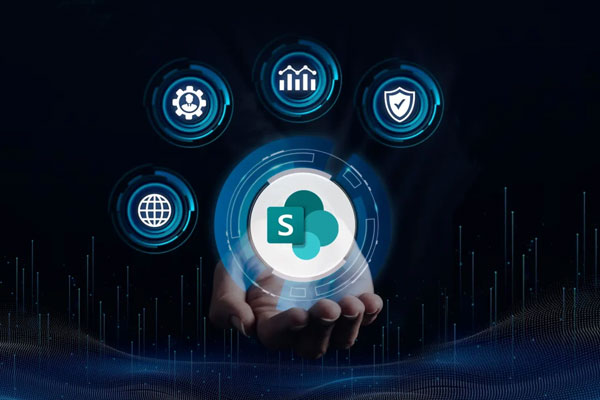
The same team that upgraded WebTop to D2 also builds document governance on Microsoft 365
On the “stay” side: a complete WebTop-to-D2 migration in a regulated environment, delivered with formal testing scenarios written by real document users. On the “leave” side: enterprise document governance and process automation built on Microsoft 365. We don’t lose the deal whichever way you go. That’s exactly why the recommendation you get is clean.
Our client engagements run 10+ years. We’re still there long after go-live, on both platforms.
The offer: a free Documentum Migration Readiness Review
45 minutes with people who deliver both paths. No fee, no prep documents required, no proposal unless you ask for one. You walk away with four deliverables:
- WebTop-deadline exposure summary: which of your users, workflows, and integrations depend on WebTop, and what stops being supported after February 2027.
- Both-paths options table: stay (D2/SmartView) and leave (M365/SharePoint, Alfresco, Box) compared on fit, disruption, and cost drivers for your estate.
- Regulated-industry risk checklist: the audit-trail, retention, and chain-of-custody items that sink ECM moves in regulated shops, whichever direction you go.
- A stay-or-leave recommendation in writing. Even if the recommendation is “stay put and do the minimum.” You can put it in front of your board with our name on it.
Questions people ask before booking
Is SmartView a separate product we have to buy?
SmartView is the modern user interface delivered with D2, not a separate platform purchase on top of it. Your licensing position depends on your current agreement and edition, which is exactly the kind of thing we pin down in the exposure summary rather than guess at here.
Can we run D2 Classic and SmartView side by side during transition?
Yes. Running both interfaces in parallel is a standard transition pattern, and it’s how you avoid a big-bang cutover. Power users who live in Classic keep working while broader user groups move to SmartView in phases. The catch is governance: you need a dated plan for retiring Classic, or “transition” quietly becomes “forever.”
What does the WebTop-to-D2 converter tool actually automate?
It handles much of the mechanical translation: presets, common configuration patterns, and structures that map cleanly from WebTop to D2. What it doesn’t do is understand your custom WDK code, your integrations, or the workflows your business bent around the old client. In our delivered migration, the customization inventory was the step that mattered; the converter accelerated what came after it. Treat it as a head start, not a plan.
How long does a WebTop-to-D2 migration actually take?
Honestly: it depends on customization depth, and anyone who gives you a number before inventorying your WDK components is guessing. A lightly customized estate is a very different project from one with fifteen years of custom code. What we can do in the review is give you a defensible low/high range for your estate, assumptions stated. A number you can budget against, not a promise we can’t keep.
What actually breaks first after February 2027?
Nothing turns off. The repository keeps running; WebTop keeps loading. What ends is support for the WebTop client: no security patches, no fixes, no vendor escalation path. The first real break is usually external. A browser or Java update WebTop was never tested against, or an auditor writing up an unsupported client in front of regulated records. You don’t get to choose the timing of either.
Is SharePoint really viable for regulated records?
For many estates, yes. Microsoft 365 has serious records-management, retention, and compliance capabilities, and we build regulated document governance on it today. But “viable” is doing work in that sentence: it takes deliberate information architecture and governance design, not a lift-and-shift of your folder tree. Some high-volume, deeply structured Documentum workloads genuinely fit better on Alfresco or staying put. That fit question is precisely what the review answers.
Do we lose version history if we migrate away from Documentum?
You don’t have to, but it’s not free. Documentum’s version trees and renditions don’t map one-to-one onto SharePoint or Alfresco versioning, so preserving full history (and proving to an auditor that you did) is a designed outcome, not a default. This is the single most common gap in exit quotes, which is why chain-of-custody planning is on our risk checklist for every “leave” path.
What does the Readiness Review cost, and what’s the catch?
Nothing, and the catch is transparent: a percentage of teams later ask us to deliver the path we recommended, and that’s the business model. The deliverables, including the written stay-or-leave recommendation, are yours to keep either way. No proposal follows unless you request one, and if the right answer is “stay put and do the minimum,” that’s what the recommendation will say.
Not ready to talk? Keep researching
Fair enough. This is a decision worth reading up on. Start with these, then come back when you want the questions answered for your estate specifically:
Keep researching
Document platform work, delivered
Real engagements from the portfolio. Same platforms, same problems.

Six months of runway. Two good paths. One honest answer.
45 minutes, free, and you leave with a stay-or-leave recommendation in writing. Even if it’s “stay put.”